“Sustainability is not a competition, but a collaboration. Only by combining expertise, territories and technology can we generate real and measurable impact.”
There is a moment when sustainability stops being a declaration and becomes infrastructure. On Friday, February 20, at the port of Termoli, this transition became visible. Fishermen, institutions, companies and technological innovation worked together to address a concrete and often invisible challenge: marine seabed pollution.
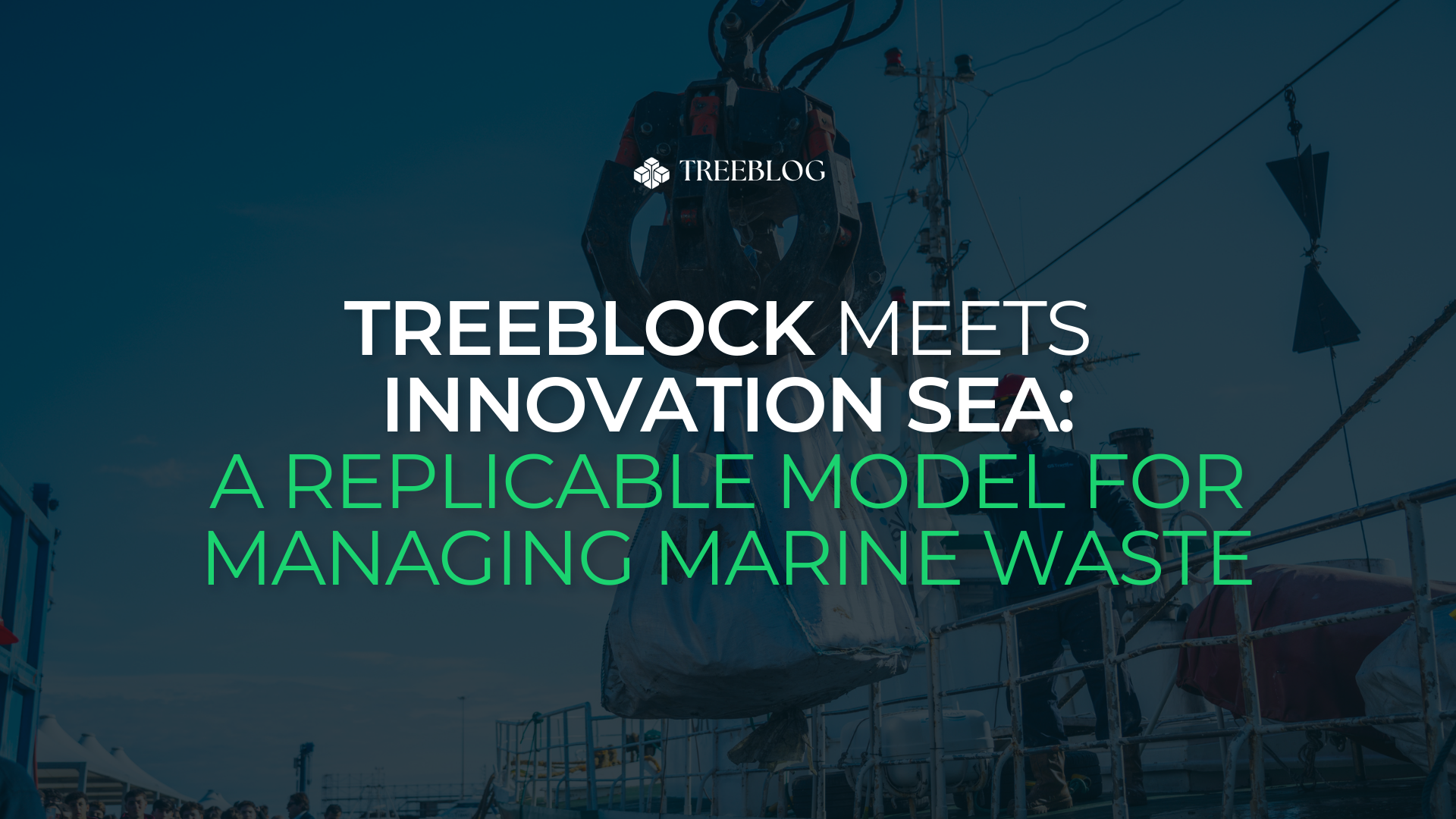
The event dedicated to SeaTrace represented a first operational step towards a structured model for managing RAP (accidentally caught waste). In less than two working weeks, with the involvement of three fishing vessels, the project has already enabled the recovery of approximately 1.3 tonnes of marine waste from the seabed, including plastic, abandoned fishing nets and mixed materials.
These figures highlight the real scale of a systemic issue and the need for scalable solutions.
A systemic approach to marine sustainability
Marine waste management cannot rely on isolated interventions. It requires digital infrastructure, operational expertise and sustainable economic models.
In Termoli, this approach was demonstrated in practice. InnovationSea acted as the operational partner, bringing over twenty years of experience in protecting Italian waters, led by Domenico Guidotti. The Nest Company provided the blockchain infrastructure for traceability. TreeBlock contributed its capability to transform environmental impact into measurable ESG data that can be integrated into corporate strategies.
Operational demonstrations, including environmental monitoring with drones and ROVs, showed how existing technologies can support the development of transparent and verifiable supply chains. The presence of European and local institutional representatives confirmed the growing interest in replicable models aligned with evolving European regulatory frameworks.
As Domenico Guidotti emphasised during the event, the challenge is not only about collecting waste, but about building a stable and continuous system that involves fishermen, companies and territories in a transparent value chain.
From fishermen to certified data
One of the key elements of the event was the demonstration of the SeaTrace process.
Through a dedicated app, fishermen record in real time the type, weight and geographic coordinates of the waste accidentally caught during their activities. This enables the progressive mapping of the most critical areas and the monitoring of intervention effectiveness over time.
Each piece of information is certified on blockchain, ensuring security, traceability and verifiability across the entire process. In this way, waste recovery becomes part of a structured information system that benefits companies, institutions and local communities.
The change is also cultural. Fishermen take on an active role in environmental management, contributing to the generation of strategic data.
The Mediterranean under pressure
In his speech, Stefan Grbovic, CEO of TreeBlock, highlighted the Mediterranean as both a fragile and strategic ecosystem. A semi-enclosed sea, crossed by commercial routes, tourism and intensive fishing, where the accumulation of plastic and microplastics on the seabed represents a growing concern.
The challenge is not only environmental. It affects supply chain quality, food safety, the reputation of coastal territories and the ability of companies to build credible sustainability pathways.
Without reliable monitoring and certification systems, sustainability risks remaining declarative. Technology therefore becomes an infrastructure of trust, capable of making every intervention verifiable.
From environmental impact to business value
Participation in the event also represented a strategic milestone for TreeBlock. The meeting strengthened and consolidated the partnership with InnovationSea, already present in the TreeBlock One Marketplace.
This enables companies to support concrete marine waste recovery initiatives while accessing certified data that can be integrated into their ESG strategies. Businesses no longer purchase generic initiatives, but instead participate in a traceable value chain, supported by verifiable evidence and aligned with the main European regulatory developments.
Environmental impact becomes measurable. Data becomes a strategic asset for governance, reporting and positioning.
Beyond the event
Termoli represents a living laboratory.
A context where local communities, innovation and companies collaborate to build replicable models.
For businesses, this means moving from episodic initiatives to integrated strategies.
For the sea, it means building a system where every piece of recovered waste becomes information, responsibility and future.