
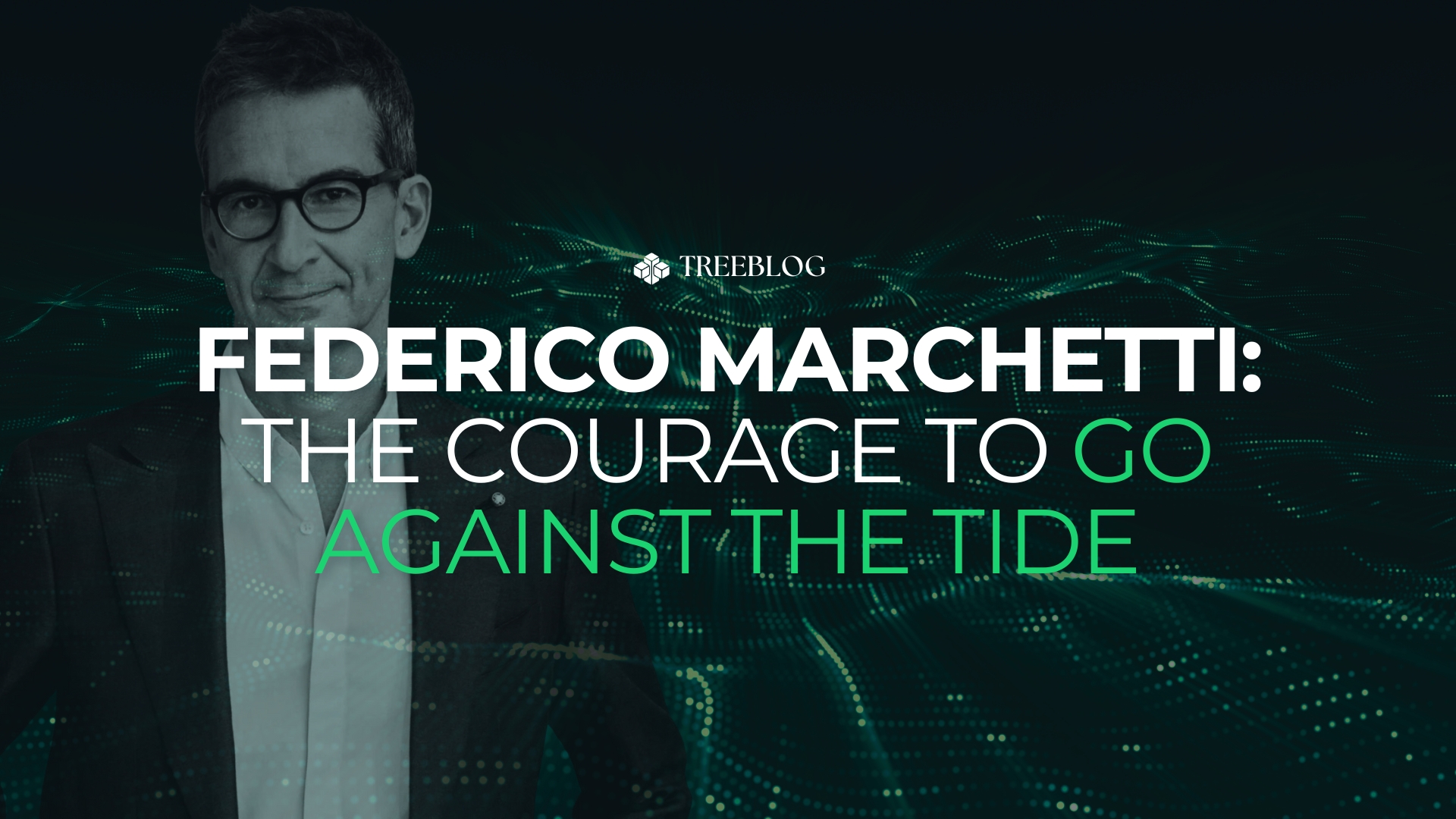
Federico Marchetti is the man who revolutionized the way we shop for fashion online. In 2000, when the internet in Italy was still a novelty for the few and digital shopping seemed far away, he founded Yoox, a platform dedicated to luxury fashion that would soon become a global benchmark. It was thanks to this intuition, seen at the time as visionary, if not outright crazy, that in 2018 he was able to sell his creation to the Richemont Group for €5.3 billion.
But the real secret behind his success lies not just in the technology or the numbers. It’s all about mindset.
“When everyone is buying, you should sell; when everyone is holding back, you must dare,” he says.
A contrarian approach that has always guided his strategic decisions. While the global economy was on its knees in 2009 and Italian companies were avoiding any kind of risk, Yoox was the only one to go public on the stock exchange. A move that, once again, proved to be a winning one.
While most Italian businesses were steering clear of uncertainty, Yoox took the risk, writing a success story in a time ruled by fear.
Marchetti’s ability to anticipate the future didn’t stop at the fashion world. As early as 2009, long before sustainability became a mainstream topic, he launched Yooxygen, a project promoting ethical fashion and recyclable packaging, marking Yoox’s first concrete step toward environmental responsibility.
Today, no longer at Yoox but more active than ever, Marchetti leads the Fashion Task Force launched by King Charles III, working to make the luxury industry more sustainable and resilient.
The Challenges of Sustainability
Yet, at a time when ESG is on everyone’s lips, sustainability is facing growing resistance. In the United States, following Donald Trump’s openly hostile stance, he called green investments “a trap for businesses”, capital is fleeing. In 2024 alone, an estimated $20 billion is expected to exit ESG funds, alongside a decline in investments in solar energy and battery storage systems.
It’s a climate of distrust and slowdown. But once again, Marchetti calls for doing the opposite: don’t stop, double down.
And some companies are doing just that.
The H&M Group, for instance, has strengthened its circular economy model through resale platforms like Sellpy, rental and repair services, and the Fashion ReModel initiative. The results are clear: from 2019 to 2024, H&M reduced its Scope 1 and 2 emissions by 41%, and Scope 3 emissions by 24%. Additionally, 96% of its electricity consumption now comes from renewable sources, while 29.5% of its materials are recycled, well on track to meet the 30% goal set for 2025.
Colgate-Palmolive has also achieved major results by implementing strategies to improve energy and water efficiency under its Net Zero Action Accelerator program. These measures led to an estimated savings of around $800 million in utility costs, proving that sustainability and economic efficiency can go hand in hand.
Conclusion
In this context, TreeBlock positions itself as the ideal partner for companies ready to move from good intentions to concrete results. Because sustainability can no longer remain just a declared value, it must become a measurable strategy.
With its all-in-one software, TreeBlock enables businesses to monitor their environmental impact, optimize energy consumption, and easily access incentives and certifications, all through one intuitive and centralized platform.
Federico Marchetti teaches us that it takes courage to anticipate the future. But it also takes concreteness to make that future real.
TreeBlock is here to help you do exactly that: turning vision into action.