
Fast Fashion is a production and distribution model in the clothing sector that aims to quickly create new collections, replicating the latest runway trends at low costs. Fast Fashion companies continuously introduce new garments to the market, often every week, to meet the demand for fashionable clothes at affordable prices.
The hidden cost of Fast Fashion
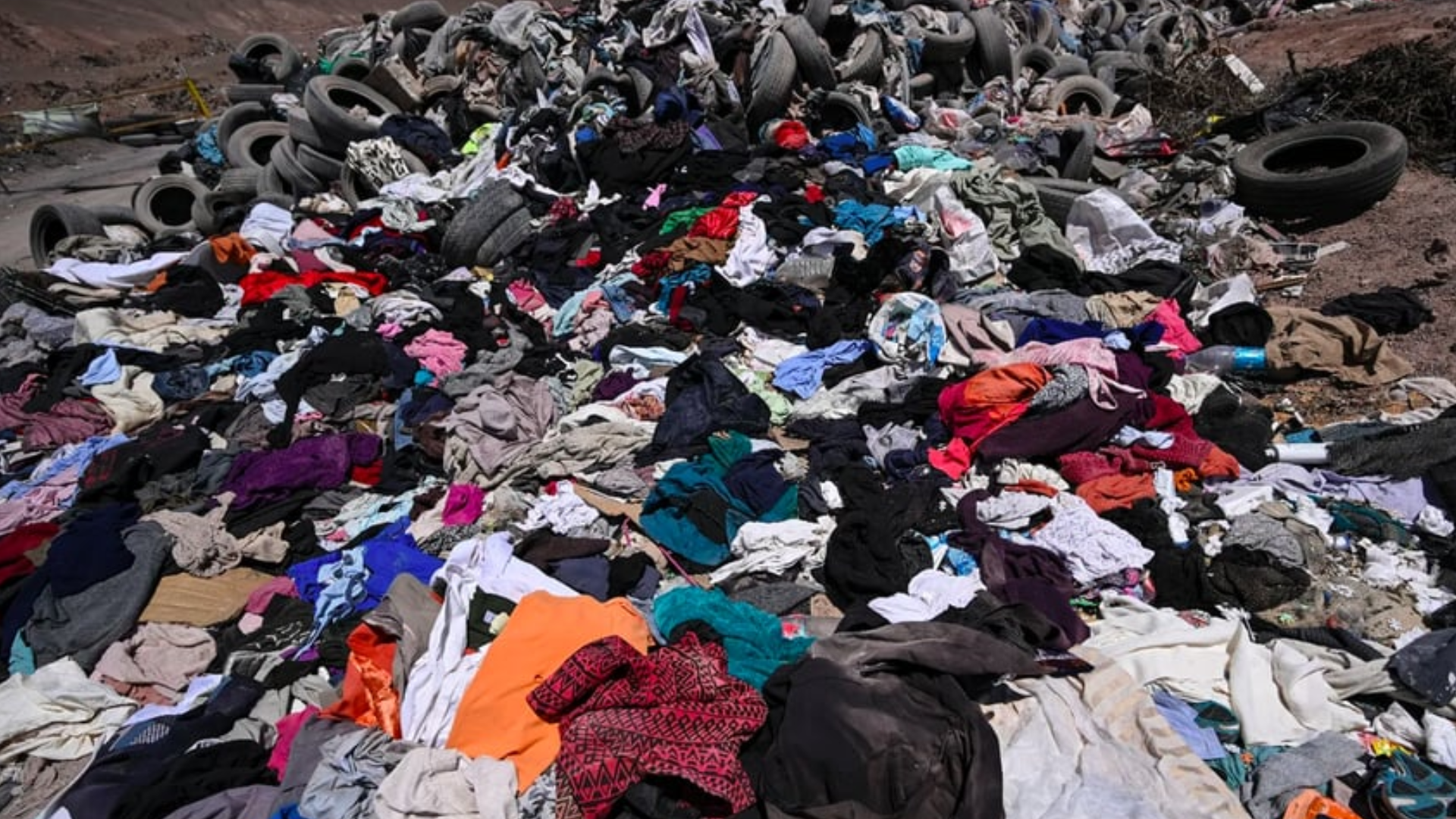
Speed and replacement. These terms could summarize today’s world and the fashion industry. The “disposable” nature of Fast Fashion leads to an enormous amount of textile waste. It is estimated that 92 million tons of textile waste are disposed of each year, many of which end up in landfills.
If these figures are not particularly concerning, consider this more tangible image: every second, a truckload of clothes is either burned or buried in a landfill worldwide.
The environmental impact of Fast Fashion
So, what impact does Fast Fashion have on the environment?
Waste of natural resources
- Water: The production of fabrics, especially cotton, requires enormous amounts of water. It is estimated that producing a single cotton T-shirt requires about 2,700 liters of water.
- Raw Materials: Intensive cotton cultivation uses pesticides and chemical fertilizers that contaminate soil and groundwater.
Water Pollution
- Microfibers: Synthetic fabrics like polyester, widely used in Fast Fashion, release microfibers during washing. These microfibers end up in the oceans, harming marine life.
- Chemical Dyes: The dyeing processes of fabrics often use toxic chemicals that can be released into water bodies, causing serious pollution problems.
CO2 Emissions
The textile production industry is responsible for about 10% of global carbon emissions.
How to mitigate the Fast Fashion problem
To address the Fast Fashion problem and its environmental impact, consumer awareness is essential. Knowing the consequences of their purchasing choices can significantly influence behaviors, making people more aware of sustainable consumption practices.
A fundamental approach is to prioritize quality over quantity: buy fewer but higher-quality garments that last longer. The concept of “cost per wear” is useful in this context, as it allows calculating the actual cost of a garment by dividing the purchase price by the number of times it is worn, thus evaluating convenience and sustainability over time.
Choosing brands that adopt sustainable practices, such as using organic materials and eco-friendly production processes, is another important step toward ethical fashion.
Moreover, giving clothes a second life is crucial: promoting the recycling and upcycling of garments (a process through which old, used, or damaged clothing is transformed into new fashion items or accessories, adding value compared to their original form) helps to reduce waste and give new life to fabrics.
Beyond consumers. The responsibility of companies
Companies also play a fundamental role in the sustainability puzzle, where every part has its precise and indispensable role.
- Transparency: companies should be clear and open about their production practices and the environmental impact they generate. This allows consumers to make informed choices and support brands that truly adopt responsible behaviors.
- Circular economy in business models: this approach aims to minimize waste by creating a continuous cycle of reuse and recycling of materials. Instead of producing, using, and discarding, the circular economy promotes a system where materials are constantly reintegrated into the production process. This not only reduces environmental impact but also decreases the demand for virgin resources, preserving ecosystems and reducing pollution.
The social impact
To conclude this overview of Fast Fashion, it is crucial to analyze the social impact in addition to the environmental one. An impact often forgotten. Fast Fashion often exploits low-cost labor in countries like Bangladesh, China, Pakistan, and India, where workers receive meager wages and work in precarious and unsafe conditions.
The examples are unfortunately many, but one case in particular comes to the memory of many: the Rana Plaza tragedy in Bangladesh in 2013, where over 1,100 workers lost their lives due to the collapse of a factory building, brought global attention to the inhumane conditions in which millions of people work.
To avoid similar tragedies in the future, companies must ensure transparency and dignified working conditions, while consumers must make conscious choices.
Governments could implement stricter regulations on working conditions in factories, forcing companies to comply with international safety and workers’ rights standards.
Additionally, they could incentivize transparency and sustainability through tax breaks and incentives for companies that adopt ethical and responsible practices.
Awareness is key
As mentioned, we live in a world where everything happens quickly. We move so fast that we often act without thinking about the possible consequences. If we stopped to think more about what our actions might cause, in many cases, we would probably make different decisions.
Living in a globalized world has its pros and cons, but one thing is certain: nowadays, every choice and action of ours is not only ours but everyone’s, because the consequences increasingly often have a global impact.