
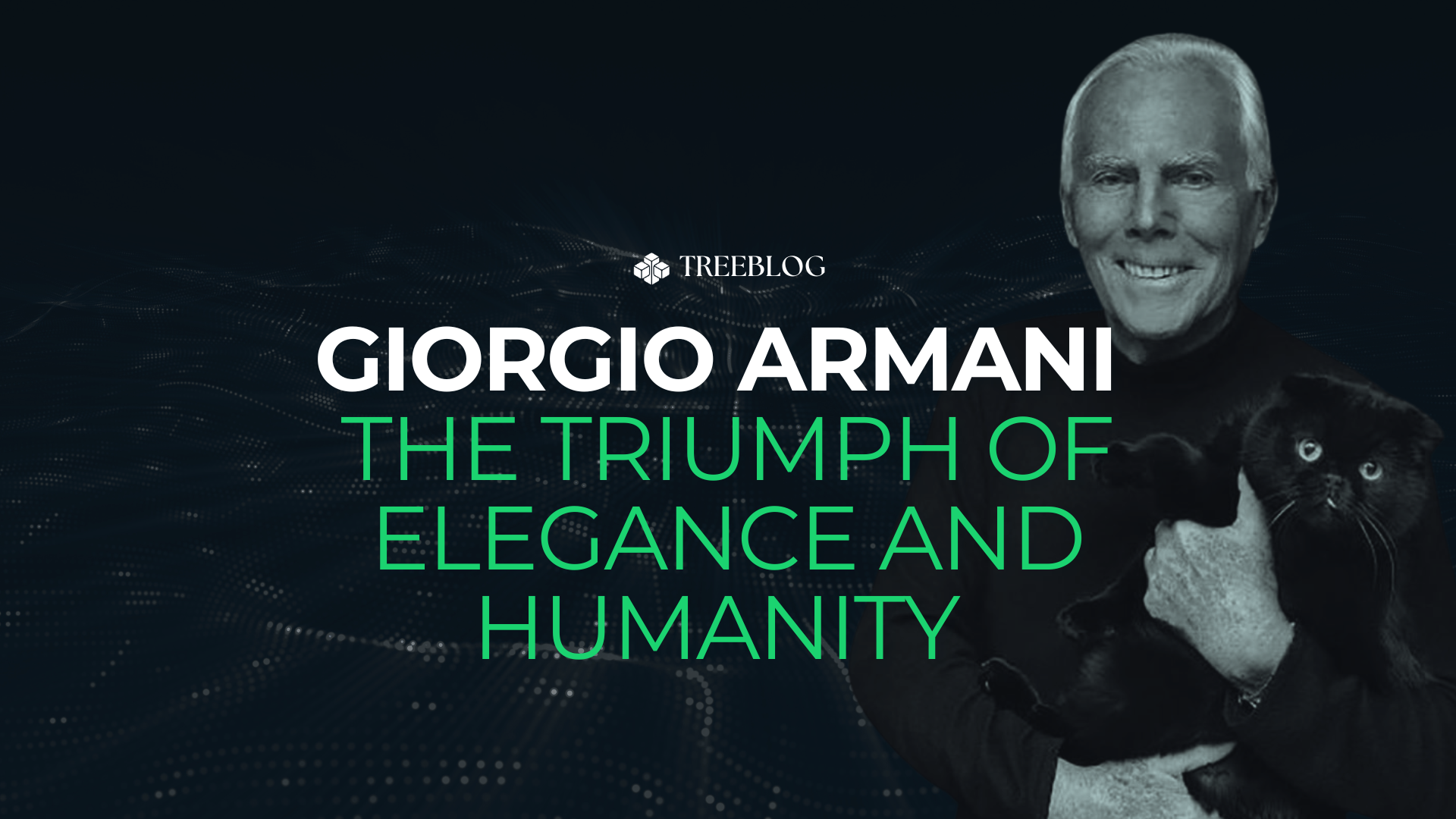
On September 4, the fashion world lost one of its most iconic figures. Giorgio Armani passed away at the age of 91, leaving behind not only unforgettable collections but also a vision of fashion that revolutionized entire generations. Known as “King Giorgio,” he turned elegance into a universal language of simplicity, sobriety, and authenticity.
Armani never loved ostentation. His minimalist aesthetic was the mirror of his character: reserved, rigorous, yet deeply human. Until the very end, he defended his independence, refusing mergers or acquisitions by the major luxury groups. A countercurrent choice that allowed him to preserve integrity and coherence. In an interview shortly before his death, he confessed that his only regret was “having dedicated too much time to work and too little to friends and family”: words that reveal the most fragile and authentic side of a man who, behind the visionary entrepreneur, always remained profoundly tied to life’s simplest values.
A Constant Commitment
Alongside his creative talent, Armani built a concrete commitment toward people and the environment. In recent years, his group reduced CO₂ emissions by 47% compared to 2019, with the goal of reaching -50% by 2030, a milestone recognized by the Science Based Targets initiative. But he didn’t stop at numbers: with the “Milano Green Circle” project, launched together with Forestami, he gave green spaces back to the city, planting hundreds of trees and tens of thousands of shrubs along the ring road. With “Acqua for Life,” he provided drinking water to over 200,000 people worldwide, turning a luxury brand into a tool of solidarity.
An Example for New Generations
Giorgio Armani was never afraid of facing the future. On many occasions, he reminded us how essential it is to listen to young people, because only through their voices can we truly understand today’s complex world. Even in an industry where appearances often prevail over substance, Armani showed that it is possible to succeed by staying true to oneself, without yielding to excess. His legacy, therefore, is not only made of clothes and runways, but also of a clear message to new generations: simplicity is not a limit, but a strength that can stand out even in an era dominated by image.
Conclusion
Giorgio Armani never focused solely on the success of his brand: he was a respected leader, close to the people he worked with, and a man who cared for the common good. The same attention he devoted to the details of his garments can be found in his respect for the environment and his will to leave a positive mark on the world. And perhaps this is his greatest lesson: elegance is not only in what we wear, but also in how we treat others and the planet we share.